Loving the distance
Forgotten letters, a lost weekend and speaking in your own language

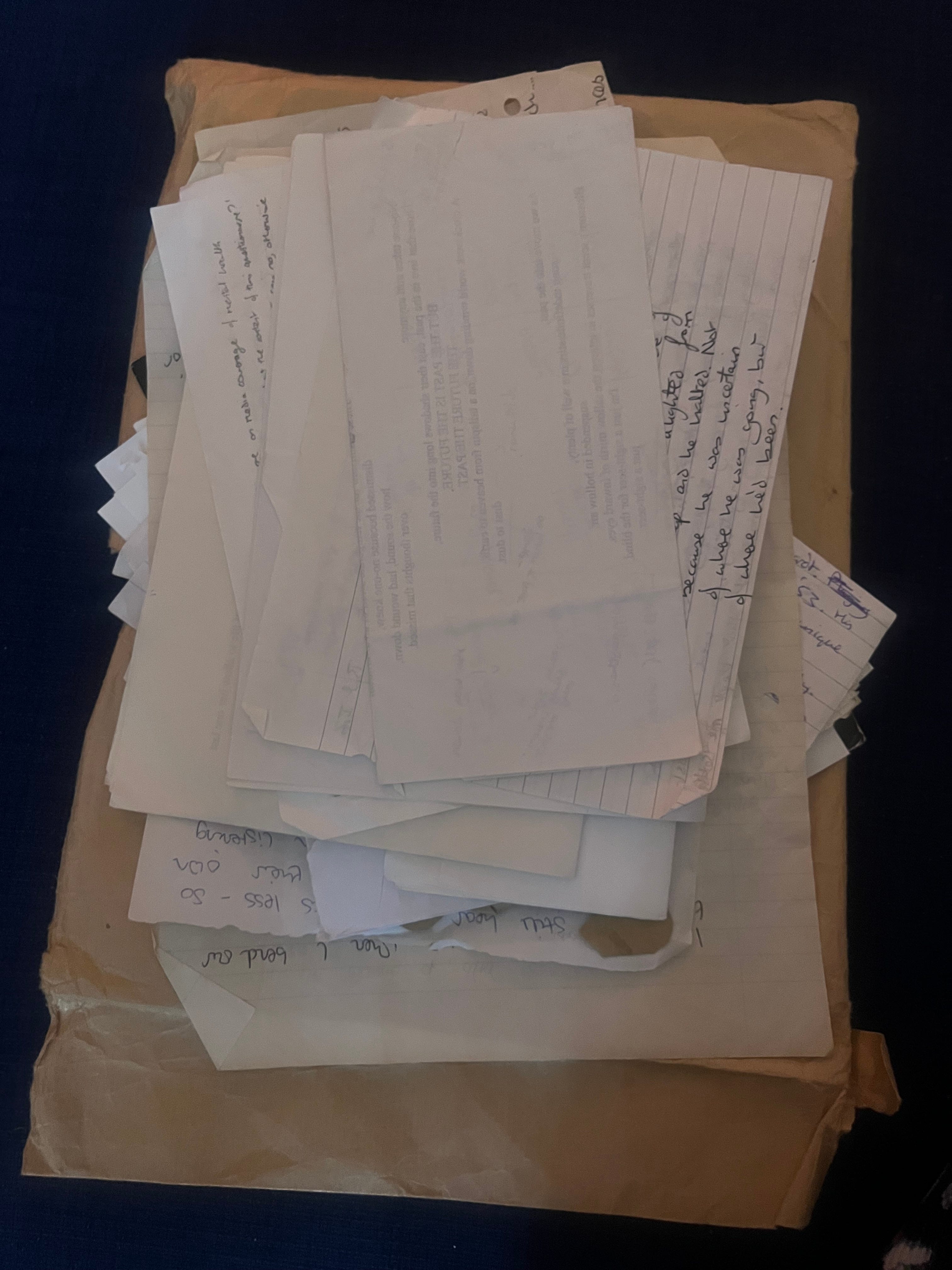
I am clearing out my office and find a brown envelope of letters with a name on. Mostly written to me by him. Though there are two fragments of letters written BY me, one ending tantalisingly mid-sentence.
I met Mark at university. We were in a drama group together, both in a show that went to the Edinburgh festival. A comedy about an office in hell. I went out with his friend, a PhD student who played the devil but went back to his ex when she recommitted to God. Mark would get annoyed on my behalf when he’d sometimes come back and flirt with me. He was convinced that his friend would recognise his egocentricity if he read Nietzsche instead of just D.H Lawrence. He even gave him a Nietzsche book. It didn’t work.
His belief that it might have done, that words and ideas were so powerful, was the thing that kept us talking and talking. But it was the mid nineties. We were both steeped in post modernism. Not just because we were pretentious students, but because we both recognised the lie of words and ideas. How they were not the THING. And not to be mistaken for it. We did a sketch imagining the French post-structuralist philosopher Jacques Derrida trying to order dinner “I would like this burger. Even though it, like all things, will never arrive”. After I finished my degree and went to languish on graduate employment courses, we would talk for hours on the phone. His touchstones being Nietzsche and Zen Buddhism, mine being postmodernism and Jung. But my stepmum who quite rightly, found our conversations completely incomprehensible as we often did ourselves, loved smoking cigarettes with him in her garage when he sometimes came to stay and was happy he could also talk about ordinary things. “He’s so nice, you’d never know he’s depressed” she’d say.
He was in the mental health system, on ever-changing pill prescriptions, in supported housing, on benefits, saw himself as someone who would write good things that not many people read. My letters are full of the things I’m off DOING. Being the world’s worst Airtours entertainer in an all-inclusive hotel in Tunisia, doing radio courses, having interviews at radio stations, joining a theatre group, starting stand up comedy, having boyfriends, becoming a radio journalist.
However, I’m confused. Grappling with something. In one of my unsent letters I say “I shouldn’t be tied up in feeling that a “real self” speaks to you versus an inauthentic persona elsewhere”.
The me of now goes “Woah, woah, woah!”. Because that was a flippin big clue. That IS how I felt because basically we were speaking my native language -but I was about to go off for several years and not only constantly speak in translation, but also come to believe that these languages WERE the real world. The languages of radio news headlines and gym membership and meal deals and Valentine’s Day and Friday nights out and Pop Idol and pay rise and detox diet and car tax and punchline and tanning beds and best, next, most.
However, it’s not like speaking my native language with Mark was unproblematic.
It’s a language itself that can be difficult to relate in. It contains gaps and silences. It can come in torrents and floods or halt to a necessary trickle. It questions its own existence and points outside itself with itself. It is multi-dimensional. It’s symbolic AND concrete. It can send like an encyclopaedia while needing to receive like a telegram, or vice versa. My mind was fluent in it but my body and nervous system hadn’t yet learned to recognise or hold it, even though it came through them. Even though eventually they could speak it without words because it’s mostly energy sometimes shaped into words. Poetry is a good expression of and for it, but is the map of it not the territory. It’s more often a spiral than a line and fragments rather than wholes -though the fragments can contain the wholes.
Perhaps this is everyone and everything’s truest language -but not everyone is as painfully aware of the gap between that and the language that society is conducted in. Now I say that -I can see I mostly wasn’t speaking that language with Mark either. We were speaking the difficulty of not speaking that language which was the closest I got to speaking it with another person back then.
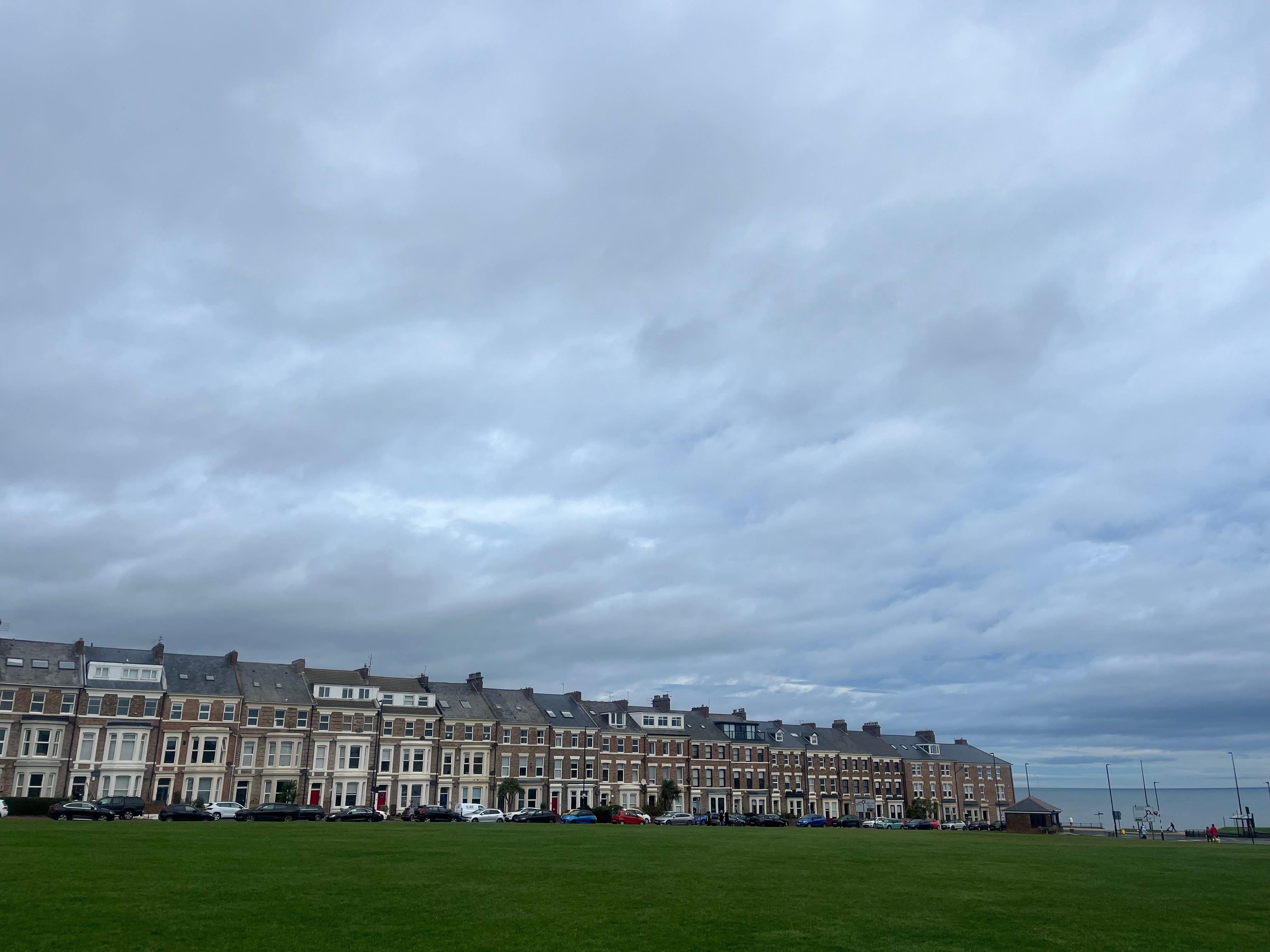
He came to stay one weekend in my little studio flat by the sea when I had my first job as an apprentice radio journalist. We walked, and talked. He smoked. We read poems to each other. One of them being Ted Hughes “Do Not Pick Up The Telephone” which didn’t help our future telephonic relationship but probably did reflect my actual feelings about phones: “Death invented the phone, it looks like the altar of death.
Do not worship the telephone
It drags its worshippers into actual graves
With a variety of devices, through a variety of disguised voices”
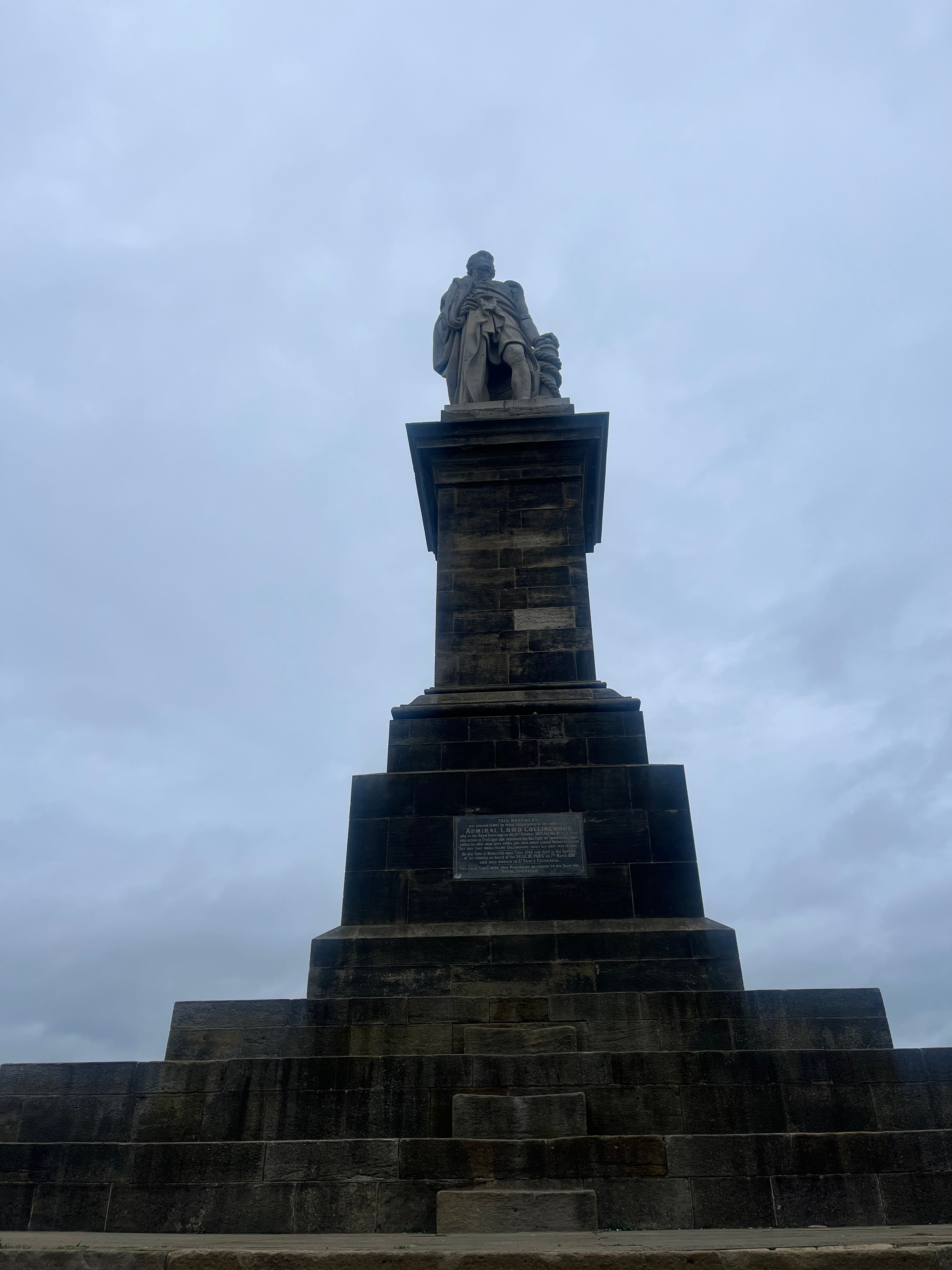
I played Clannad’s soundtrack of sea themed music from the telly show Atlantic Realm and All About Eve’s Martha’s Harbour. In a letter afterwards Mark said the weekend had been a haven, a harbour, belonging for a wanderer. It was an oasis for me. He sent a poem including the Admiral Collingwood statue we’d walked to: “The sea stood still/a quiet mind locked in a wave’s fall/and I fall from the Admiral’s gaze”. What must be a draft of my reply is in the same envelope “One whose locked vision is frozen after battles/beside him we could only flow”.
Then there is a series of letters where Mark writes and seems not to get a response. He tries to be okay -“the irony of the post modernist wanting a reply” but says how our connection is “painfully important” to him. It was painfully important to me too, which is probably partly why I didn’t reply. Shortly after, I was due to take up a new job as a radio newsreader and had to delay starting because I entirely lost my voice. I didn’t connect those things then and don’t know whether to now.
(“Shouldn’t you just have got it on instead of going on about literary theory?”. The me of now remembers why not, while also wondering that. Mostly when we knew each other, we were seeing other people, whose unsuitability hints at itself in our epistolary enquiries: “Are things on an even keel with x now?”.
There was an erotic energy in our conversations, in the sense of erotic as life, as energetic connection. But the fall into “Now we have done this or not done this, what are we to each other in our completely different life trajectories?” answered itself before it came up. Or didn’t answer itself and was put in a cupboard so it didn’t inconveniently ask other connections that too.
Mark said I made him think of the line in The Smiths song “What She Said”:
“What she read, all heady books she’d sit and prophesise”.
Ironically, that line about a girl who is in her brain and not yet her body, also functioned itself as a prophecy because the next line is “It took a tattooed boy from Birkenhead to really really open her eyes”. The next line pretty much came true. Twenty years later, and eighteen miles out, I finally experienced a relationship for a while in which both my brain and body learned to experience the language without words.
Though, as it had taken so long and felt so rare, I mistook that for the thing the language pointed to. I thought the church was the worship. Transcendent sex as religion. Like the conversations with Mark had, it felt like an expression of my real self, when many other interactions felt inauthentic. As true as other rare encounters. Like swimming in lakes and rivers. Like standing on Holy Island at dusk and being here and also in 650 and 1300 and 1867, like making a whole audience laugh or cry with a poem which often feels like a truer interaction than a conversation…
I have no memory of whether I did reply to those particular unreplied to letters but I do know that Mark came to my wedding 11 years later with his lovely girlfriend, now wife. And that finding her online to re contact him again has led me to her beautiful podcasts which share her investigations as a linguistics lecturer with a take on language that makes sense of everything we were struggling with then. What if, she asks, language is not actually the pinnacle of human consciousness and achievement, but something that cuts us off from other ways of seeing and experiencing the world. The ways most other earth things have.
This resonates with my draw towards Quaker meetings held in silence, Buddhist retreats where words and worlds dissolve, the mystical contemplation more usually found in stillness than in church services or theological debate. What Mark and I were circling through postmodernism and Zen was that words point AWAY from the thing, that the territory exceeds the map. These traditions have always known that silence isn’t absence of communication but presence of it in forms language can’t capture. (See also -the loud silence of the dead but that’s a whole other kettle of bones).
This is also an insight of the neuroqueer theorists who show us how an idea of “normal” is enforced in language. For example -definitions and expectations of a friend, a partner, a lover come through language first. They point to how only what can be described in language makes up the normal consensus social world which is not just limiting but actively oppressive to alternative neurodivergent ways of processing reality: via image, pattern, gestalt (wholes incorporated into parts), symbol, fertile silence and energy.
In one of Mark’s letters he said that to really touch someone is to identify with their absence. I possibly took that a bit literally in my non-replies. Though he mentions his gratitude for the book of Milena’s letters to Kafka I had gifted him that weekend, knowing of his identification with Kafka. In his next letter, he says finding his Milena is his fantasy. The Czech writer, and Austrian journalist Milena, had an almost entirely epistolary relationship in which Kafka said he wished the world would end tomorrow because then he’d be able to love her without scruples, fear or restraint. Perhaps me & Mark and Kafka all needed a bit more development time than some to get to grips with the potential overwhelm of embodiment and entanglement alongside the paradox of separateness.
Much later I’ve come closer to recognising that to really touch someone is to identify with their absence and their presence -and the myriad ways they express that inside and outside of language. In biggest summary: to love them. The German poet Rainer Maria Rilke seems to get this. Him, prolific letter writer who was also “not very at home in the interpreted world”. I don’t know why he wasn’t in mine and Mark’s shared word hoard in the nineties. Possibly for lack of a decent translation. But I’ll end with this from him, before I send it as part of an overdue reply to Mark:
“Once the realisation is accepted that even between the closest human beings infinite distances continue, a wonderful living side by side can grow if they succeed in loving the distance between them which makes it possible for each to see the other whole against the sky.”